
Put a Cape Verdean near music, and dancing follows. That is no cliché; Marco literally saw it happen hundreds of times on Santiago: at a birthday party, in a local bar, right out on the street. Music and rhythm are woven into daily life, and part of that tradition originated here on Santiago.
Morna: The Soul of Cape Verde
Morna is the best-known music style of Cape Verde: melancholic, poetic, and deeply rooted in saudade, a kind of wistful longing. Its greatest ambassador was Cesária Évora, the ‘Barefoot Diva’ from Mindelo (São Vicente), who made morna world-famous by consistently performing barefoot. Since December 11, 2019, morna has officially been on the UNESCO list of the Intangible Cultural Heritage of Humanity. Anyone who hears live music in a restaurant on Santiago in the evening will often hear morna.
Batuque: born in Santiago
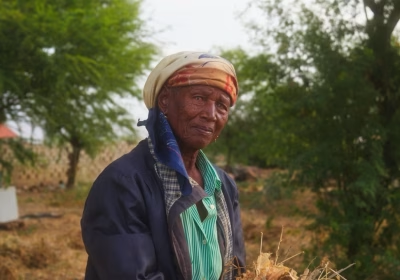
Where morna is connected to São Vicente, batuque (also spelled batuku) is a tradition that comes specifically from Santiago. It originated among women who worked the land during Portuguese colonization. Because drums were forbidden, the women used rolled-up cloths, called txabeta, as a percussion instrument between their legs. A batucadeira leads the group in a song with a call-and-response structure, while the others rhythmically respond and dance. The colonial government even banned batuque because it was seen as a ‘rehearsal for freedom.’ After independence in 1975, batuque was actively promoted as a source of national pride. If you are on Santiago during a local festival, there is a good chance you will experience batuque live: a tradition that is nowhere else on the islands as alive as here.
Funaná dance
Alongside batuque, funaná is the other major Santiago tradition: an upbeat dance style to the rhythm of accordion and ferrinho (a scraped iron rod). Just like batuque, funaná was suppressed for a long time because the colonial government considered it too African and too sensual. Nowadays you can hear it everywhere at parties. Kizomba, originally from Angola but with its own Cape Verdean variant, is also widely danced.
Carnival in Cape Verde
In February, the country is dedicated to the Mardi Gras carnival, with the largest edition on São Vicente. On Santiago, the villages and towns celebrate their own smaller-scale parades, featuring colorful costumes and live music.
Daily life and Morabeza
Behind all the music lies one word that you see everywhere on Santiago: Morabeza. It is difficult to translate in a single word, but it comes down to hospitality, coziness, and a relaxed attitude toward life. You notice it in how quickly a local invites you to dance along, or how naturally a conversation starts at the market in Assomada.
Do you want to get even closer to that culture? Learn a few words Kriolu, the language of Cape Verde, and you notice how fast the doors open.
Experience the culture of Santiago with Marco
Our tours take you to the markets, villages, and places where local culture still thrives on a daily basis, not just during a festival.
Frequently Asked Questions
What is the difference between morna and batuque?
Morna is melancholic and poetic, with roots in São Vicente. Batuque is rhythmic and energetic, with roots specifically on Santiago, and originally performed by women as a form of resistance against colonization.
Can I as a tourist see real batuque or funaná live on Santiago?
Yes, especially during local festivals and in bars outside the tourist center. Ask your guide to take you along, because the best performances are rarely found in travel guides.
Who was Cesária Évora?
The most famous morna singer in the world, born in Mindelo, known as the ‘Barefoot Diva’ because she always performed barefoot. Her music put Cape Verde on the map worldwide.