




Anyone who truly wants to understand Cape Verde must go to Cidade Velha. This small town on the southern coast of Santiago is not just a tourist attraction. It is the place where the history of the islands began, where European colonists first set foot in the tropics, and where centuries of trade, culture, and human suffering have left their mark.
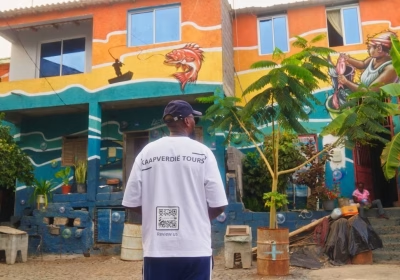
Bruno, local guide for Kaapverdië Tours on Santiago, visits Cidade Velha multiple times a week. And it overwhelms him every single time. In this article, he tells you everything you need to know for a visit.
What is Cidade Velha?
Cidade Velha, Portuguese for “old town”, was the first European colonial town in the tropics. It was founded in 1462 by Portuguese settlers and for centuries served as an important hub in transatlantic trade, including the slave trade. In 2009 Cidade Velha, officially registered as “Cidade Velha, Historic Centre of Ribeira Grande”, was added to the UNESCO World Heritage List. UNESCO recognises the town as a testimony to the first European colonial settlement in the tropics, to centuries of trade between Europe, Africa and the Americas, and to the history of the transatlantic slave trade.
Today it is a quiet village of fewer than a thousand inhabitants, but the remains of that turbulent past are palpable everywhere. In the narrow cobblestone streets, the ruins of Cape Verde's first fort, and one of the oldest European-built churches in sub-Saharan Africa, you can feel how deeply history is embedded here. It is a place that makes you look differently at Cape Verde, at Africa, and at the world.
What makes Cidade Velha so special is the combination of historical significance and everyday tranquility. There is no hustle and bustle here, no mass tourism, and no excessive commercialization. You simply walk through the streets, feel the past all around you, and talk with people who have lived here their entire lives.
The main attractions
Pelourinho
The symbol of Cidade Velha is the Pelourinho: an imposing stone pillar in the middle of the central square. In colonial times, slaves were punished here and displayed as a deterrent to the rest of the population. Today, it stands as a silent monument to a dark past. The Pelourinho dates from the 16th century and is one of the best-preserved examples of colonial justice in West Africa. For many Cape Verdeans, the Pelourinho is a powerful symbol of resistance and identity.
Church of Our Lady of the Rosary
Further up the hill stands the Igreja de Nossa Senhora do Rosário, built around 1495. This is one of the oldest European-built churches in sub-Saharan Africa. The building is austere yet impressive with thick stone walls, a modest tower, and an interior that breathes centuries of prayer and history. Take the time to be quiet for a moment. It is a place that will stay with you.
The Sé (cathedral ruins)
Not far from the Igreja de Nossa Senhora do Rosário lie the ruins of the Sé, Cidade Velha's cathedral. Construction began in 1556 and was only completed in 1705, almost a century and a half later. In the early 18th century the cathedral was looted, and what remains are impressive stone ruins about 60 metres long. In 2004 the remains were restored and consolidated, not to bring the church back into use, but to preserve the ruin as a monument. Walk between the remaining walls and columns and you can feel the scale of what once stood here.
Royal Fort of São Filipe
Above the village towers the Forte Real de São Filipe, built in the late 16th century by the Portuguese to protect the city against pirate attacks, including those of Francis Drake, who sacked the city in 1585. From the fort you have a spectacular view over the bay, the village, and the ocean. The walk up is steep but definitely worth it.
Banana Street
Rua Banana is the living aorta of Cidade Velha. Here you will find small restaurants, local stalls with fresh produce, and older residents sitting in the shade watching life go by. This is the place to try a local ponche or a Cape Verdean dish. Cachupa is prepared here the way it should be: slowly, with fresh ingredients and a lot of love.
The valley of Ribeira Grande
Around Cidade Velha stretches the Ribeira Grande valley, a lush green landscape with sugarcane plantations, banana trees and small farms. Some of Santiago's oldest grogue producers are located here, and a visit to a traditional trapiche is an unforgettable experience.
Practical information
How do you get there? Cidade Velha is located about 15 kilometers west of Praia. With a local aluguer, it takes about 20 to 30 minutes to get there. As part of a guided tour by Kaapverdië Tours, you will be picked up and brought back, including explanations along the way by Bruno.
How long do you need? Plan for half a day if you want to take your time looking at everything. Those who really take their time can also spend a full day there.
Admission fees: Most sights are free to access or charge a small contribution. The fort has a small admission fee that directly contributes to the maintenance of the heritage.
Best time to go: Early in the morning, before the heat of the day and before any groups arrive. The atmosphere is then at its most authentic and the lighting ideal for photography.
What to eat and drink: Try the cachupa at one of the local restaurants on Rua Banana. Drink a glass of ponche as an introduction to the local grogue tradition.
Why Cidade Velha is more than just a trip
For Bruno as a local guide, Cidade Velha is not just a point on a map. It is a conversation with the past. The slave trade that took place here, the Portuguese architecture, and the Cape Verdean identity that grew out of it despite everything: it touches you if you really take the time for it.
Bruno was born and raised on Santiago and tells you stories that are not in the guidebook. About families who have lived here for generations. About the meaning of the Pelourinho for the Cape Verdean community today. About why this place is so important for understanding who Cape Verdeans are and where they come from.
Cidade Velha confronts you with a piece of world history that often remains underrepresented in Western history books. It makes you pause, reflect, and listen. And it ultimately allows you to return to your daily life with greater respect and understanding.
Visit Cidade Velha with Bruno
Do you want to discover Cidade Velha in the most authentic way? Check out our Old City tour where you visit the plantations, the fort, the church and Rua Banana with Bruno, including a traditional grogue tasting. Prefer something more active? Our Cidade Velha hike combines the same historic highlights with an easy walk through the surrounding area, suitable for beginners. An experience you'll take home with you.
Frequently asked questions about Cidade Velha
Why is Cidade Velha on the UNESCO list?
Cidade Velha was the first European colonial city in the tropics and played a central role in trans-Atlantic trade, including the slave trade. Its unique historical and cultural value led to its inclusion on the UNESCO World Heritage List in 2009.
How far is Cidade Velha from Praia?
Cidade Velha is located about 15 kilometers west of Praia, a 20 to 30-minute drive by taxi or aluguer.
How long do you need for a visit?
Allow at least half a day. With a walk through the valley, lunch, and a visit to all the sights, a full day is well spent.
Is Cidade Velha free to visit?
Most places are free or ask for a small contribution. The Forte Real de São Filipe has a small entrance fee.
Is Cidade Velha suitable for children?
Yes, but the walk to the fort is steep. Rua Banana, the church, and the central square are easily accessible for all ages.
What is the Sé in Cidade Velha?
The Sé is the cathedral ruin of Cidade Velha. Construction began in 1556 and was completed in 1705; after it was looted in the early 18th century, mainly the stone walls remained. Since a restoration in 2004 the ruin has been open to visitors as a historic monument.

Comments (4)