




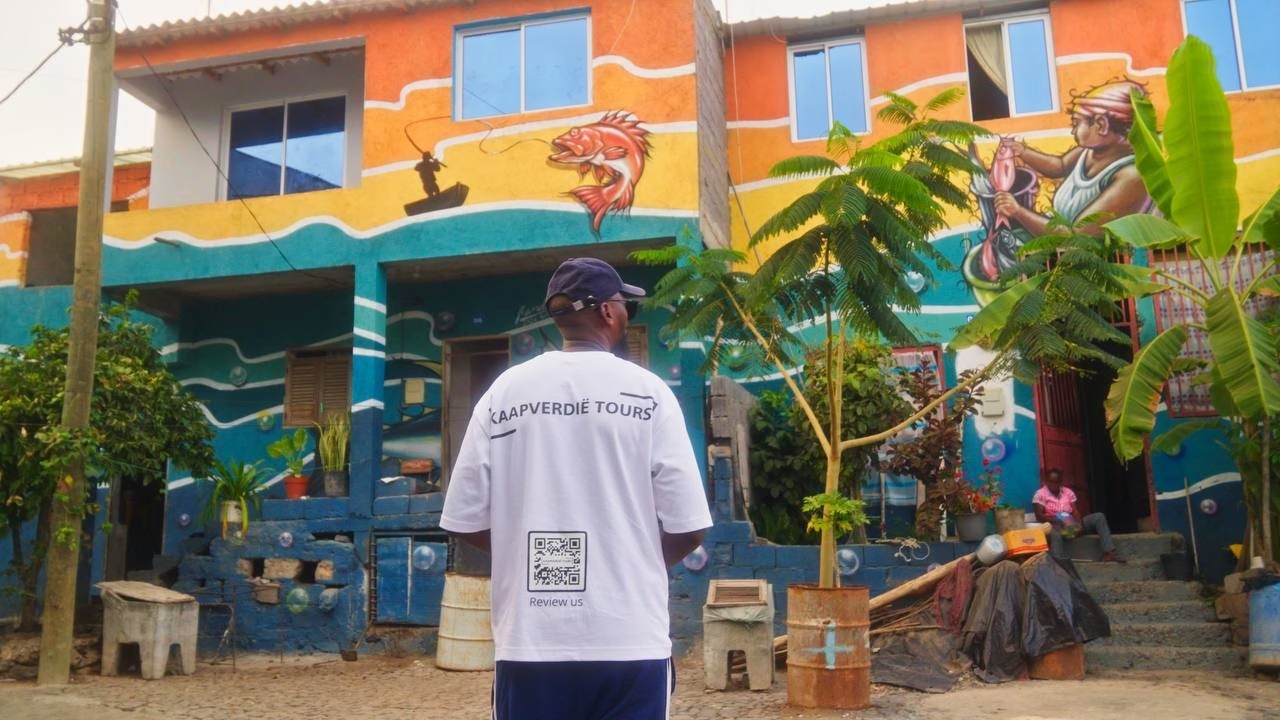
There are few things as deeply rooted in Cape Verdean culture as grogue. Anyone who walks the streets of Santiago will see sugarcane plantations along the mountain slopes. Anyone who sits down with a local family is almost always offered a glass. And anyone who truly wants to understand what life on the islands feels like drinks their first sip of grogue with Bruno, a local guide from Cape Verde Tours, who tells you where it comes from. In this article, we take you into the world of Cape Verde's national drink.
What is grog?
Grogue, pronounced as “grôg”, is an unaged rum made from fresh sugarcane and produced in the Cape Verde Islands. It is similar to Brazilian cachaça or Caribbean clairin, but has its own unmistakable character: raw, powerful, sometimes fruity and always authentic.
The alcohol content ranges from about 40% to sometimes more than 60%, depending on the producer and the distillation process. Some varieties are mixed with honey, coffee, or fruit to create a sweeter punch. This is the more approachable version for visitors who want to take it a little easier. But true connoisseurs drink grogue neat, at room temperature, and take their time to let the flavor settle.
The history of grogue
Grogue has its roots in the colonial period. Portuguese colonists brought sugarcane to the islands in the 15th century, and the local population soon learned the art of distillation. What began as a byproduct of sugar production grew into a cultural symbol inextricably linked to the Cape Verdean identity.
In Santiago, and particularly in the Ribeira Grande valley nearby Cidade Velha, small family distilleries have been active for centuries. The so-called trapiches are wooden sugarcane presses driven by donkeys or oxen that grind the cane into juice, which is then fermented and distilled. Many of these traditional methods are still used, passed down from father to son.
Over the course of the centuries, grogue has earned a special place in the social life of the islands. It was served at births and funerals, at harvest festivals and weddings. It was a medium of exchange, a sign of hospitality, and a way to celebrate community. That significance has not changed to this day.
How is grogue made?
The production process of traditional grogue is simple, but requires craftsmanship and patience. It all starts with the sugarcane, which is harvested by hand on the slopes of Santiago. The cane is then brought to the trapiche, where it is pressed into fresh juice.
This juice, called guarapa, is poured into large vats and left to ferment for a few days. During this process, the natural sugars convert into alcohol. The fermented juice is then distilled in copper or steel stills heated by charcoal. What remains after distillation is the raw grogue: clear in color, sharp in taste, and infused with the scent of sugarcane and tropical earth.
Some producers age their grogue in wooden casks, giving it a warmer color and a smoother taste. These aged varieties are rarer and are particularly appreciated by connoisseurs.
Ponche: the accessible variant of grogue
Not everyone is immediately a grogue lover at the first sip because it is a strong, expressive drink. That is why ponche is often the better introduction. Ponche is a mix of grogue with sugar, honey, or fruits such as tamarind, papaya, or lemon. The result is a smooth, warm drink that perfectly fits the relaxed atmosphere of the islands.
On Santiago, you will find ponche at almost every local restaurant and in markets. Every producer has their own recipe and their own ratio of ingredients. Always ask for the version of the day because a good ponche is always freshly made. A glass of ponche at sunset on a terrace in Cidade Velha is an experience you won't soon forget.
Where can you taste the best grogue on Santiago?
As a local guide, Bruno knows the places you won't find on Google Maps. These are his recommendations.
Ribeira Grande and Cidade Velha are the heart of grogue production on Santiago. In and around Cidade Velha, you will find small family-run distilleries where you can observe the production process up close. Seeing a real trapiche in action is an unforgettable experience that gives you a completely different understanding of what is in your glass.
The Sucupira Market in Beach offers dozens of bottles of grogue and ponche from small producers. Here you can taste and compare and take a bottle home as a souvenir. Ask the vendors about their own favorite producer because everyone on Santiago has an opinion on the best grogue.
With a local family you drink the best grogue. Not in a bar, but at the kitchen table of a Cape Verdean family. Through the guided tours of Cape Verde Tours, guests regularly end up in places where local hospitality, the Morabeza, puts a glass in your hands before you know it.
Grogue and Cape Verdean Culture
Grogue is more than a drink. It is present at celebrations, at mourning, at the celebration of a good harvest, and simply at the end of a workday. Pouring grogue is an act of hospitality and a way of saying that you are welcome.
In the Cape Verdean musical traditions of morna and coladeira, grogue is frequently sung about as a symbol of island life: sometimes heavy, sometimes joyful, but always real. The great Cape Verdean singer Cesária Évora referred to grogue several times in interviews as part of her daily life and her connection to the islands.
Refusing your grogue at a local offer? No problem at all. A friendly smile and a brief explanation are always understood and respected. The Morabeza applies to everyone, including non-drinkers.
Are you allowed to take grogue home?
Yes, grogue is a popular souvenir and one of the best ways to take a piece of Cape Verde home with you. You can find nice bottles at local markets, in small shops in Praia, and directly from producers in Ribeira Grande. Do pay attention to the liquid restrictions for hand luggage and pack your bottles in your checked baggage. A nice bottle of grogue or ponche from a local producer is a gift that is guaranteed to stand out and bring a story along with it.
Taste grogue on our Cidade Velha tour
Would you like to taste grog where it has been made for centuries? At our Old City tour visit the plantations, see a traditional trapiche and taste real local grogue accompanied by Bruno, who tells you everything about the culture surrounding it. A taste you won't forget.
Do you have any questions about your trip to Cape Verde? Read our frequently asked questions about a holiday to Cape Verde.
Frequently asked questions about grogue
What exactly is grogue?
Grogue is an unaged rum made from fresh sugarcane, produced in the Cape Verde Islands. Its alcohol content ranges from approximately 40% to over 60%.
What is the difference between grogue and ponche?
Grogue is pure distilled sugarcane. Ponche is a mix of grogue with sugar, honey or fruit and is therefore more accessible for those who find the pure taste too intense.
Where do you buy the best grogue on Santiago?
At the distilleries around Cidade Velha and Ribeira Grande, at the Sucupira market in Praia, or via a guided tour where you taste directly from a local producer.
Are you allowed to bring grogue on the plane?
Yes, in your checked baggage. In carry-on luggage, the standard liquid rules apply (max 100 ml per bottle in a clear bag).
Is grogue dangerous or very strong?
Grogue has an alcohol content of 40 to 60%. Drink in moderation, especially when trying it for the first time. Ponche is a gentler introduction for those who want to take it easy.
You can best taste grogue together with local food. Also read our guide about the Cabo Verdean cuisine for the dishes that go with it perfectly.

